Helping with first day of school nerves
By Allie · 4 min read · Updated
Starting primary school brings a lot of new things to get used to. The gate, the lunchbox, the goodbye and the way home are all things you can explore together. Start with the parts your child wants to know about, then practise a little at a time.
Read and talk together
First Day at Big School follows a child through the school gate, into a classroom with a place for them, and towards new friends and favourite books. After reading, invite your child to draw three pictures: arriving, something they want to try, and meeting you again. This example cover shows one child's version of the personalised story.
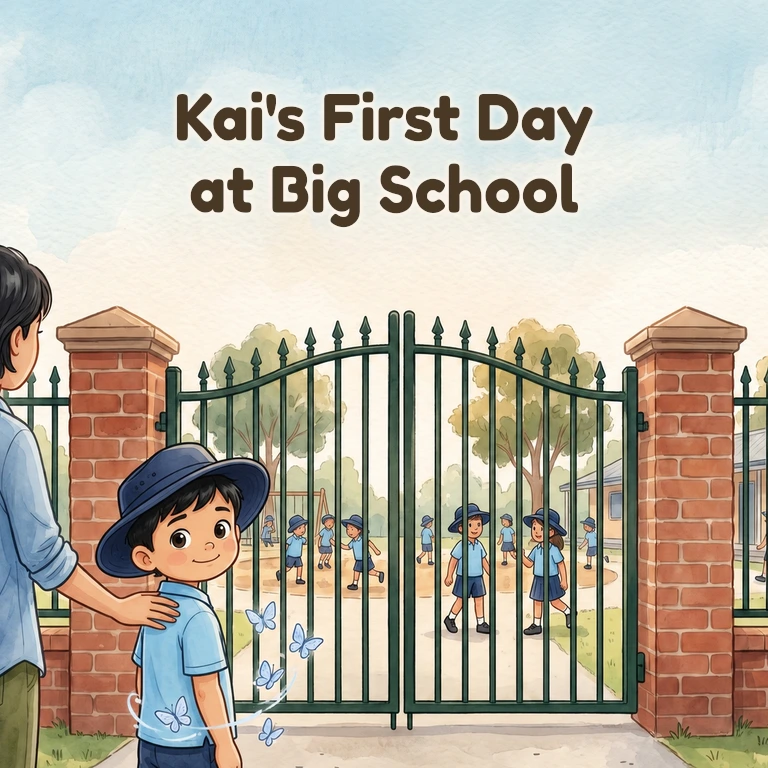
- What would help a new child find where to put their bag?
- How could you invite someone to draw with you?
- What would you like to tell your grown-up at pick-up?
Find out what the first morning looks like
Use the school's orientation information to talk through arrival, where bags go and who meets the children. Visit when the school offers an opportunity, and look at any classroom or teacher photos it provides. Ask which entrance to use and how pick-up works so your explanation matches the actual day.
Try this: a ten-minute practice morning
Set up a tiny school at home with a bag hook, a chair and a toy as the teacher. Invite your child to choose whether they play themselves or the teacher. You only need to rehearse a few steps.
- Put a school sun hat, water bottle and lunchbox into the school bag together.
- Walk to your pretend classroom and find a place for the bag.
- Practise your goodbye: a hug, a short phrase and a wave.
- Let the toy ask for help opening the lunchbox or finding the toilet.
- Finish with pick-up. Say who will come and where they will meet.
Swap roles if your child wants another turn. A toy who cannot open its lunchbox gives them a small problem to solve. If they would rather just play schools, follow their lead; you can try the practical bits on another day.
Give them words for asking for help
Try short phrases together: 'Can you help me open this?' or 'Where do I put my bag?' Let your child use their own words. Tell the teacher about communication or support needs before the first day so you can agree on an approach that suits your child.
Choose a goodbye you can repeat
Check the school's drop-off routine, then choose a brief goodbye that feels natural in your family. For example: 'One hug, one wave. Grandma will meet you here after school.' Make sure the promise matches that day's plan. If leaving is difficult, work with the teacher on the handover.
Give them time to unwind after school
Leave room for a snack, play or quiet time before asking lots of questions. When your child is ready, try one small question: 'What did you use your textas for?' You can share something from your own day too, so it feels like a conversation.
Keep a note of recurring concerns in your child's own words. If they are struggling to settle, contact the teacher to compare what happens at home and at school. Raising Children Network's preparation guide has more suggestions for working with the school through this transition.