Preparing a toddler for a new baby
By Allie · 4 min read · Updated
The cot is going up, tiny clothes are appearing, and your toddler has questions. Preparing for a new sibling can start with ordinary conversations, a few familiar routines and chances to play. Here are some ways to make the coming change easier to picture.
Read and talk together
In The New Baby, the older child wonders whether there will be enough cuddles after their sibling arrives. Use that question as a conversation starter with your child. The cover shown here is an example; the book you create is personalised around your own child.
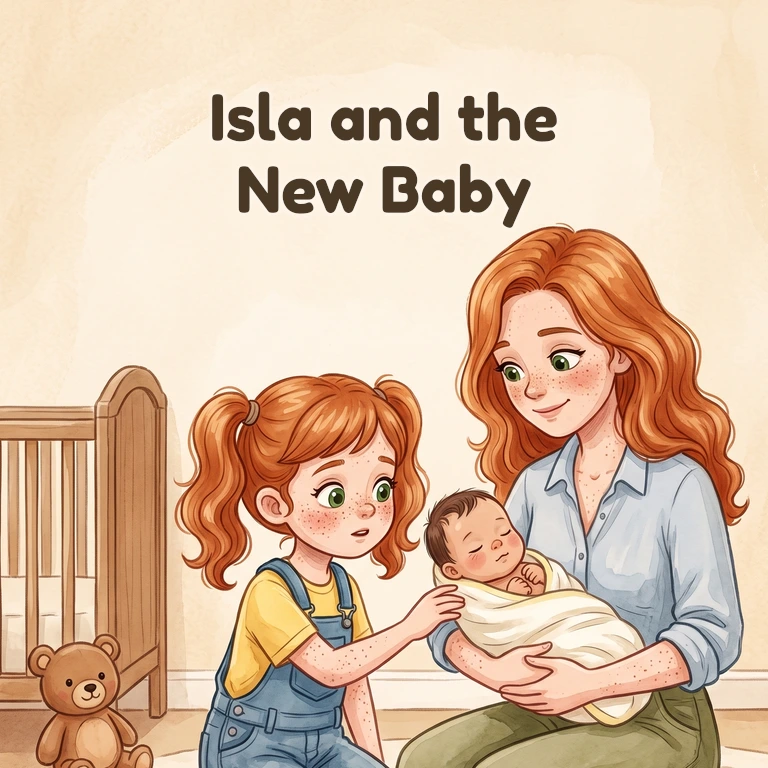
- Which familiar thing would you like us to keep doing together?
- If your teddy wanted a cuddle while you were busy, what could you say?
- What song or picture would you like to share with the baby?
Explain what a baby actually does
Use things your child can see: the baby's clothes, a picture of them as a newborn, or a doll tucked into a blanket. Explain that a new baby sleeps, feeds and cries, and will need time to grow before they can play together. Keep the conversation short and return to it when your child is interested.
Try a concrete answer to a concrete question. If they ask whether the baby will share their toys, you might say: 'At first the baby will be too little for your blocks. We can show them the tower you make.' Use the words and family names your child already knows.
Try this: draw what the day will look like
Fold a piece of paper into three panels: morning, afternoon and bedtime. Together, draw one thing your child usually does in each panel. Stick figures are plenty. Then add who will help with those things when the baby arrives.
- Morning: draw breakfast and the person taking them to childcare or preschool.
- Afternoon: draw a familiar game, walk or visit with someone they know.
- Bedtime: draw their chosen book and who will read it with them.
Leave a space for a plan that is still uncertain. You can say, 'We are working that bit out.' Put the drawing somewhere your child can reach and use it to explain any changes. It gives you something to point to when your child asks what will happen.
Offer a small way to join in
Your toddler could choose between two baby outfits, make a welcome picture or pick a song to sing. Give them an easy way to stop if they lose interest. They can be part of the family change while grown-ups do the caring.
Plan for wanting you at the same time
Keep a familiar book or small activity near the place where you expect to feed the baby. Think about how your older child can sit nearby. Let other adults know which everyday moments matter to them, such as a bath-time song or the walk home.
If your child asks for a cuddle while your hands are full, describe what happens next: 'I hear you. I will put the baby down safely, then you can sit with me.' When possible, make space for time together that follows their interests.
Let the welcome be their own
A child might want to look closely, ask the same question several times or go back to playing. Offer a chance to meet the baby and leave room for their response. Raising Children Network's guide below has more advice on preparing siblings and planning the first meeting.